


Muscle mobility affects everything from how you move in the morning to how well you recover after a hard workout. The problem is the market for muscle mobility equipment is crowded, and not every tool delivers what it promises. Choosing the wrong gear means wasted money and, worse, zero progress on the tightness or pain you are trying to fix. This guide cuts through the noise with a curated list of must-have tools for muscle mobility, what each one actually does, who benefits most, and how to use them effectively regardless of your fitness background.
Table of Contents
- Key takeaways
- Must-have tools for muscle mobility: how to choose wisely
- 1. Foam rollers: the starting point for myofascial release
- 2. Massage balls for precision trigger point work
- 3. Handheld massagers and percussion devices
- 4. Resistance bands for active mobility
- 5. Stationary deep tissue boards with interchangeable attachments
- 6. Stretch straps and mobility sticks
- 7. Comparison of key mobility tools by use case
- My honest take on building a mobility toolkit that actually gets used
- Thrival tools designed for real muscle relief
- FAQ
Key takeaways
| Point | Details |
|---|---|
| Effectiveness beats quantity | A tailored routine with fewer tools consistently outperforms owning many gadgets you rarely use. |
| Use tools 3-4 times weekly | Structured, regular use produces better joint health results than occasional sessions. |
| Combine passive and active tools | Pairing foam rollers with resistance bands targets both tissue release and active range of motion. |
| Budget as low as $25 | A foundational mobility kit covering core needs can be built for $25 to $100. |
| Apps extend tool benefits | Digital coaching apps reinforce correct form and consistency, multiplying the return on your tools. |
Must-have tools for muscle mobility: how to choose wisely
Before you buy anything, knowing what separates a genuinely useful tool from a gimmick saves time and money. Here is what to evaluate.
- Target specificity. Does the tool actually reach the muscle group causing you problems? A foam roller is perfect for your thoracic spine. It will not get into your psoas or piriformis without help.
- Versatility. Multi-attachment tools or tools with adjustable designs let you address several body areas with one purchase. This matters more than raw price.
- Portability. If a tool lives in your closet, it does not help you. The best mobility aids for athletes and desk workers alike are ones you will actually pick up and use.
- User-friendliness. Complicated tools with steep learning curves often get abandoned. Look for tools with clear instructions or app support.
- Cost vs. value. You do not need to spend hundreds. Physical therapists recommend lacrosse balls and stretch bands that cost between $12 and $60 as primary tools.
- Routine integration. The best tool is the one you use consistently. Research shows structured use 3-4 times weekly produces measurable improvement in joint health and flexibility.
Pro Tip: Start with two or three versatile tools rather than building a full arsenal at once. Master those first, then add specialized tools if specific needs arise.
1. Foam rollers: the starting point for myofascial release
Foam rollers remain one of the most therapist-recommended flexibility tools for muscles because they address large surface areas fast. They work by applying sustained pressure to the fascia, the connective tissue surrounding muscles, which breaks up adhesions, improves blood flow, and reduces soreness. Target areas include the thoracic spine, IT band, quadriceps, hamstrings, and calves.
Standard foam rollers come in several densities. Softer rollers suit beginners or sensitive areas. High-density options go deeper into tissue and are preferred by experienced users. Grid-pattern surfaces add variable pressure for a more textured release.
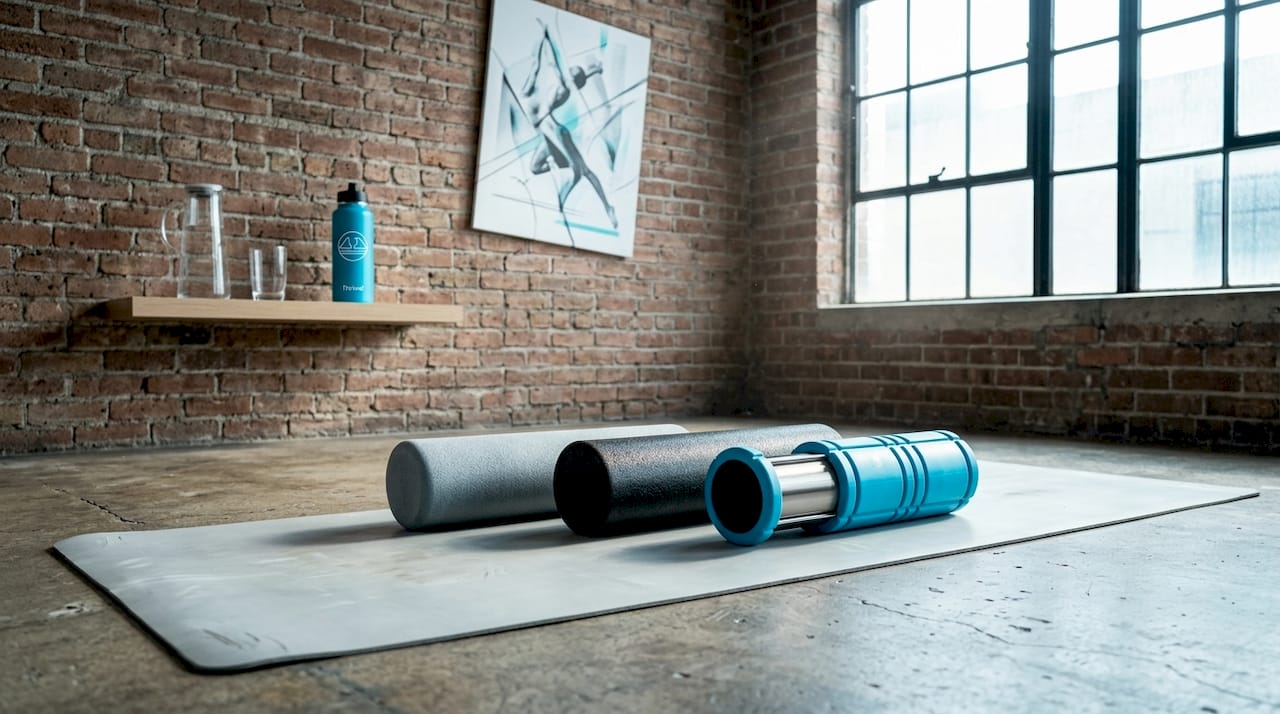
The real upgrade in this category is the adjustable telescopic foam roller. Adjustable-length rollers let you target small, precise areas without losing the ability to cover long muscle runs. They also collapse for storage, which is a genuine practical advantage for home users.
Pro Tip: Roll slowly. Spend 30 to 60 seconds on each tight spot rather than rushing through large areas. Pause on tender points and breathe through the pressure to allow the tissue to release.
2. Massage balls for precision trigger point work
Where foam rollers cover broad areas, massage balls go small and specific. Targeted pressure from massage balls releases trigger points in areas like the hips, shoulders, glutes, feet, and the base of the skull. These spots are physically impossible to reach with a foam roller.
Lacrosse balls are the gold standard. They are firm enough to penetrate deep tissue, inexpensive, and nearly indestructible. Spiky massage balls offer a different sensation, stimulating circulation and surface tissue before you go deeper. Softer options, like tennis balls, work well for sensitive areas like the feet or under the thoracic spine.
Here is how to choose between them:
- Lacrosse ball: Deep glute release, shoulder blade work, plantar fascia relief
- Spiky ball: Foot activation, general warm-up, circulation in forearms and calves
- Double peanut ball: Thoracic spine mobilization without putting pressure directly on vertebrae
For anyone who sits at a desk for hours, a lacrosse ball placed under the hip or against a wall for shoulder work can resolve tension in five minutes that stretching alone would take weeks to address. You can learn more about releasing trigger points effectively with the right tool and technique.
3. Handheld massagers and percussion devices
Percussion devices have earned their spot in any serious muscle recovery toolkit. Portable massage guns deliver rapid pulses of deep tissue stimulation that accelerate muscle recovery, reduce delayed onset soreness, and improve circulation before or after activity. They work fast, which makes them practical before a workout or during travel.
Compact handheld massagers without motors offer a different but still valuable experience. They require you to control the pressure manually, which helps you dial in exactly how much force a sensitive area needs. Heat-based massagers add circulation benefits but trade off portability.
The key distinction: use a percussion device for broad muscle groups like the quads, lats, or upper back. Use a manual handheld tool or a ball for targeted joint capsule work, hip flexors, or areas close to bone where a powerful device would be too aggressive.
4. Resistance bands for active mobility
Passive tools like rollers and balls release tissue. Resistance bands build on that release by training muscles to move through their new range with control. This is the step most people skip, and it is the reason their flexibility gains disappear within 48 hours.
Resistance bands enhance both flexibility and strength by supporting assisted stretching and active mobility drills like controlled articular rotations, or CARs. CARs are slow, deliberate movements that take a joint through its full range of motion under load. Using a band to add gentle traction or assistance lets you explore range you could not reach alone.
Practical exercises to start with:
- Band-assisted hip flexor stretch: Anchor band low, step forward into lunge, let the band pull hip back gently
- Shoulder CARs with resistance: Hold band overhead, slowly circle arms through full range with light tension
- Banded hamstring stretch: Loop band around foot, lie back, pull leg gently toward ceiling while keeping leg straight
- Ankle mobility drill: Anchor band at ankle height, step forward, drive knee over toe with band resisting forward movement
Physical therapists recommend using resistance bands in your mobility routine 3-4 times per week to build lasting change in joint range and control.
Pro Tip: After foam rolling or ball work, immediately perform 2-3 sets of banded CARs for that same area. The tissue is warm and receptive. This sequence produces faster, more durable mobility gains than either approach alone.
5. Stationary deep tissue boards with interchangeable attachments
This category is less familiar to most people but deserves a spot on any list of essential mobility tools. Non-motorized deep tissue boards use a base platform with attachment points where you can swap out different heads depending on the area you want to target. No batteries, no charging, and no complicated settings.
Different attachments serve different functions. A ballhead attachment replicates the classic lacrosse ball effect for trigger point work. A wave-shaped attachment covers broader muscle runs along the spine or IT band. An arch attachment supports spinal decompression and thoracic extension. A bullseye attachment targets the precise center of a trigger point with concentrated pressure.
The advantage over single-use tools is significant. One base unit replaces four or five separate pieces of equipment. Because you control depth and angle with your own body weight, you apply exactly the pressure that feels right. This approach is particularly effective for back, hip, neck, and shoulder work.
For anyone dealing with chronic tension in these areas, exploring a complete muscle recovery tool guide can help you identify which attachment style matches your specific needs.
6. Stretch straps and mobility sticks
Stretch straps and mobility sticks are the underrated workhorses of any flexibility tools for muscles collection. A stretch strap with multiple loops lets you move through assisted stretches with precision, adjusting leverage by simply moving your grip along the strap. This is safer and more controlled than using a towel or a partner.
Mobility sticks, sometimes called dowel rods in physical therapy settings, help you practice overhead patterns, hip hinge mechanics, and thoracic rotation. Placing a stick along your spine during a hip hinge teaches you the correct movement pattern instantly through tactile feedback, which verbal cues or mirrors cannot replicate.
These tools cost very little but deliver real results when used with intention. A stretch strap paired with a foam roller covers most foundational mobility needs for under $40 total.
7. Comparison of key mobility tools by use case
Choosing the right combination of tools depends on your goals, lifestyle, and budget. This table gives you a direct comparison.
| Tool | Best for | Portability | Price range | Ideal user |
|---|---|---|---|---|
| Foam roller | Large muscle groups, spine | Moderate | $15 to $50 | Everyone |
| Lacrosse ball | Trigger points, hips, shoulders | High | $3 to $15 | All levels |
| Resistance bands | Active stretching, CARs, activation | High | $10 to $30 | All levels |
| Percussion device | Broad muscle recovery, post-workout | Moderate | $50 to $300 | Athletes, frequent users |
| Deep tissue board | Targeted release, spinal work | High | $80 to $200 | Home users, athletes |
| Stretch strap | Assisted flexibility, joint range | High | $10 to $25 | Beginners, rehab users |
Apps that provide guided mobility routines with features like CARs and PNF stretching improve consistency and form significantly. Pairing your physical tools with a dedicated coaching app means you are never guessing about technique or sequence. Thrival offers a companion app with guided routines matched to their tool system, which removes the guesswork entirely.
For travel or desk workers, the highest priority tools are a lacrosse ball, a resistance band, and a compact deep tissue attachment kit. All three fit in a gym bag and address the areas most affected by prolonged sitting. For home-based training, add a foam roller and a deep tissue board for a complete setup.
A therapist-approved toolkit does not need to be expensive. The full range of effective options covers $25 to $100 for foundational gear, with professional-grade systems available for those who want more precision and durability.
My honest take on building a mobility toolkit that actually gets used
I have watched a lot of people invest in mobility equipment and then leave it in a corner. The pattern is consistent. They buy five things at once, feel overwhelmed, and default back to doing nothing. The tools were fine. The approach was not.
What I have seen work, time and again, is starting with two tools: something for passive tissue release and something for active movement. A firm ball and a resistance band. Use those for three weeks, consistently, and you will feel a genuine difference. Then you know what areas still need work and what kind of tool would actually fill that gap.
I have also seen people dramatically underestimate non-motorized tools. There is a tendency to assume that more technology means more results. In reality, consistent, tailored routines with simple, well-designed tools outperform random use of sophisticated gadgets every time. The body responds to regular, correct input. It does not care how expensive the input device was.
The deep tissue board category is one I wish more people knew about earlier. The ability to swap attachments and target the psoas, the thoracic spine, and the shoulder capsule with one piece of equipment is a genuine efficiency gain. For anyone working on back pain relief, that kind of precision changes the experience considerably.
Build your kit around what you will use. Then use it.
— Cameron
Thrival tools designed for real muscle relief
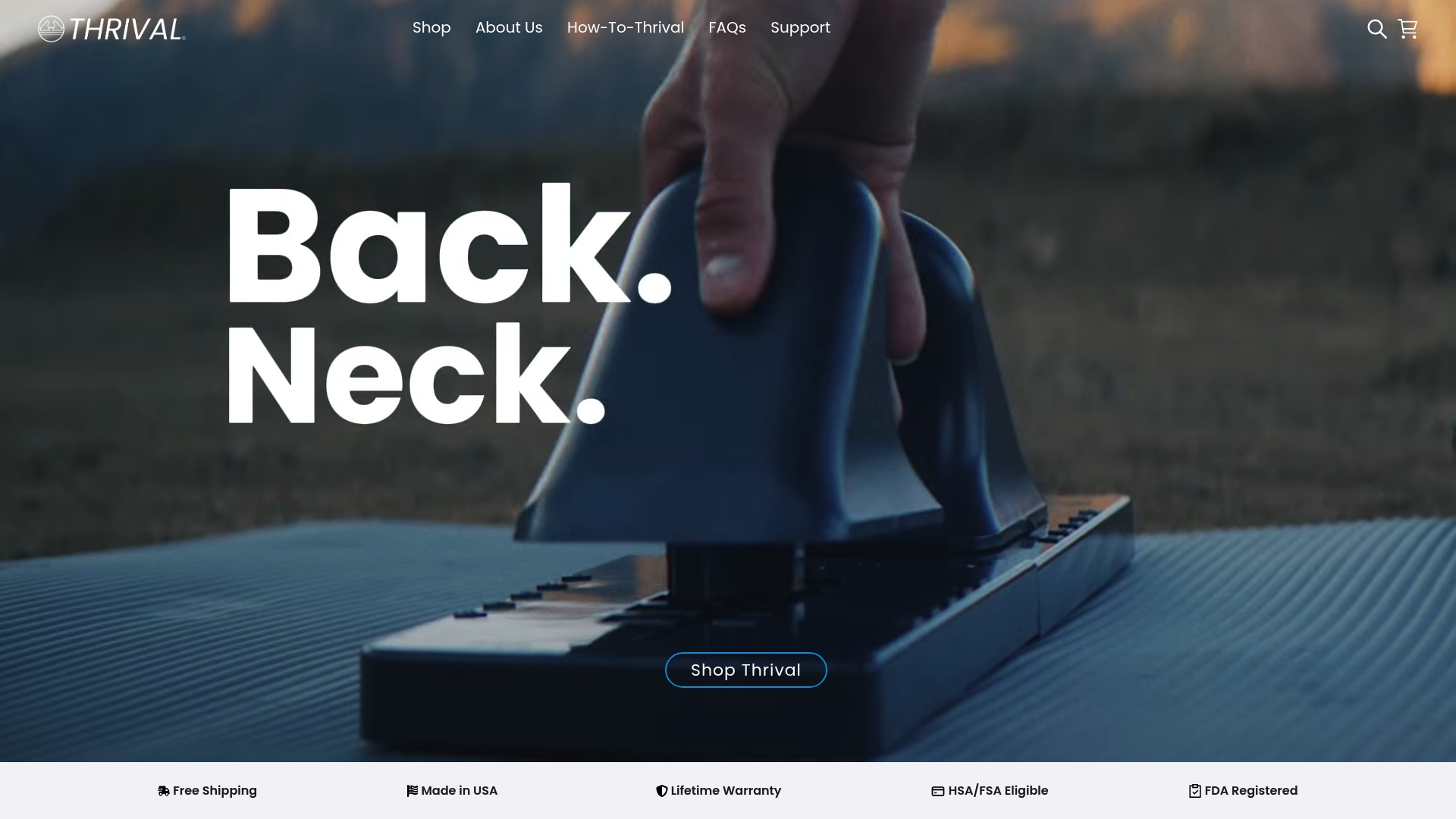
Thrival’s deep tissue recovery system is built around exactly what this guide recommends: precision, versatility, and consistent use. The Thrival Deep Tissue Pro uses a single base board with interchangeable attachments including the Bullseye, Wave, Arch, and Ballhead, each designed to target specific areas like the spine, hips, and shoulders without motors or complicated setup. It is made in the US, FDA registered, and backed by a lifetime warranty. For anyone addressing deep psoas tension or hip flexor tightness, the adjustable psoas release tool at Thrival offers precision access that standard tools cannot match. Free shipping, a companion app with guided routines, and professional athlete endorsements back every product in the lineup.
FAQ
What are the best tools for muscle mobility at home?
Foam rollers, lacrosse balls, and resistance bands form the core home toolkit. A deep tissue board with interchangeable attachments adds professional-grade precision without requiring a therapist visit.
How often should I use muscle mobility tools?
Physical therapists recommend using mobility tools in structured routines 3-4 times per week for measurable results in joint health and flexibility.
Are expensive mobility tools worth it?
Not necessarily. A solid foundational kit costs $25 to $100. The priority is quality and consistency of use, not price. A $10 lacrosse ball used daily outperforms a $200 device used once a month.
What tool works best for back and hip tension?
Non-motorized deep tissue boards with arch and bullseye attachments offer the most targeted relief for spinal and hip areas. Lacrosse balls are also highly effective for hip trigger points.
Can I improve muscle mobility without seeing a physical therapist?
Yes. Guided mobility apps combined with the right tools provide structured routines that produce real results for most people. Seek professional guidance if you have acute injury or chronic pain.