


Persistent muscle pain is not always a sign that you need more rest or another round of pain medication. Sometimes, the real problem is a tight, sensitive knot buried inside the muscle itself. Trigger point therapy targets exactly those spots, using direct pressure to release tension, reduce pain, and restore normal movement. This article explains what trigger points are, how therapy works, what the research actually shows, and how you can start applying these techniques safely at home, whether you’re an athlete, a desk worker, or anyone dealing with stubborn muscle discomfort.
Table of Contents
- What are trigger points?
- How does trigger point therapy work?
- Benefits and limitations: what the evidence says
- Getting started: safe and effective home techniques
- Why trigger point therapy is misunderstood—and what really works
- The next step: tools and support for your trigger point therapy journey
- Frequently asked questions
Key Takeaways
| Point | Details |
|---|---|
| Trigger points explained | Understanding muscle knots is key to managing pain and recovering flexibility. |
| Therapy works fast | Properly applied trigger point therapy often relieves pain and aids recovery in minutes. |
| Evidence-based benefits | Trigger point therapy is supported by research for short-term pain and soreness reduction. |
| Home care is effective | Using the right protocols and tools, anyone can benefit from safe self-treatment. |
| Consistency beats intensity | Regular gentle pressure is more effective and safer than occasional hard force. |
What are trigger points?
A trigger point is a hyperirritable spot within a tight band of muscle fiber. It’s tender to the touch, and pressing on it often produces pain that radiates to a completely different area of the body. That referred pain pattern is what makes trigger points so confusing. You might feel discomfort in your shoulder but the actual source is a knot in your upper back. Your body is sending hidden muscle messages that don’t always point directly to the problem.
Trigger points are classified as either active or latent. Active trigger points cause pain even without direct pressure, disrupting daily movement and sleep. Latent trigger points are silent until you press on them, but they still limit range of motion and alter muscle function. Both types affect performance and recovery.
Common causes of trigger points include overuse, injury, stress, poor posture, or muscle imbalances. Repetitive motions, like typing, lifting, or running the same pattern over and over, create microtrauma in muscle fibers. The body responds by tightening that area, and over time a knot forms. Emotional stress also contributes, as chronic tension often settles into the neck, shoulders, and jaw.
Physical signs that you may have active trigger points include:
- Localized tenderness when pressing on a specific muscle spot
- Referred pain that travels to a nearby or distant area
- Reduced range of motion in the affected joint or limb
- Muscle stiffness, especially in the morning or after prolonged sitting
- A palpable tight band or “nodule” within the muscle tissue
- Fatigue or weakness in the affected muscle without a clear injury
Athletes are especially prone because of the volume and intensity of training they put their bodies through. Office workers develop them from sustained static postures, particularly in the neck, upper traps, and lower back. Even hip tension from prolonged sitting can create a cascade of trigger points throughout the lower body, affecting gait and athletic performance.
Pro Tip: Start noticing patterns in your pain. If your headache always starts in the same spot, or your shoulder aches after a specific movement, that consistency is a clue. Referred pain doesn’t always originate where you feel it, and tracking those patterns helps you target the right area.
Understanding where trigger points form and why is the first step toward addressing them effectively. Most people chase the symptom instead of the source, which is why so many self-treatment attempts fall short.
How does trigger point therapy work?
Now that you recognize what causes these stubborn knots, let’s break down how trigger point therapy actually works in practice.

Trigger point therapy is a hands-on treatment approach that uses targeted, sustained pressure to interrupt the pain cycle within a tight muscle band. The pressure temporarily restricts blood flow to the area. When released, fresh oxygenated blood rushes back in, helping the muscle fiber relax and reset. This process is called ischemic compression, and it’s one of the most well-studied manual therapy techniques available.
The basic process follows a clear sequence:
- Locate the trigger point. Press along the muscle belly until you find a spot that is noticeably tender or produces referred pain. It may feel like a firm nodule or a tight cord within the muscle.
- Apply sustained, firm pressure. Hold direct pressure on the point for 30 to 90 seconds. The discomfort should be a “good hurt,” not sharp or unbearable. Breathe steadily throughout.
- Release slowly and assess. After releasing pressure, gently move the joint through its range of motion. You should notice some immediate softening or reduced tenderness.
- Repeat as needed. Most protocols call for 3 to 5 repetitions per session, targeting the same point or adjacent ones in the same muscle group.
- Follow with gentle stretching. Light stretching after pressure work helps the muscle fiber stay in its lengthened state and reinforces the release.
There are several methods used by professionals and individuals alike. Dry needling inserts a thin needle directly into the trigger point to produce a local twitch response, which signals the muscle to release. Manual therapy performed by a licensed massage therapist or physical therapist uses thumb or elbow pressure. For home use, self-release strategies using balls, rollers, or specialized devices replicate the sustained pressure effect without needing a clinical appointment.
“Empirical data shows moderate to strong evidence for pain reduction and improved range of motion from ischemic compression and dry needling. Massage reduces delayed onset muscle soreness post-exercise, with effects greatest at 24 to 72 hours. Systematic reviews note short-term benefits but call for more high-quality randomized controlled trials.”
Here’s a side-by-side look at how professional treatment and self-treatment compare:
| Factor | Professional treatment | Self-treatment at home |
|---|---|---|
| Precision | High, guided by trained hands | Moderate, improves with practice |
| Cost | Higher per session | Low, one-time tool investment |
| Accessibility | Appointment required | Available anytime |
| Technique options | Dry needling, manual therapy | Pressure tools, foam rollers |
| Best for | Complex or chronic cases | Maintenance, mild to moderate tension |
| Safety oversight | Clinician present | Self-monitored, follow safety essentials |
Both approaches work. The right choice depends on the severity of your condition, your access to care, and how consistently you can commit to a routine. Many people find the best results come from combining professional sessions with daily home maintenance.
Benefits and limitations: what the evidence says
Once you know the process, it’s important to understand what the real benefits and natural limits of trigger point therapy are.
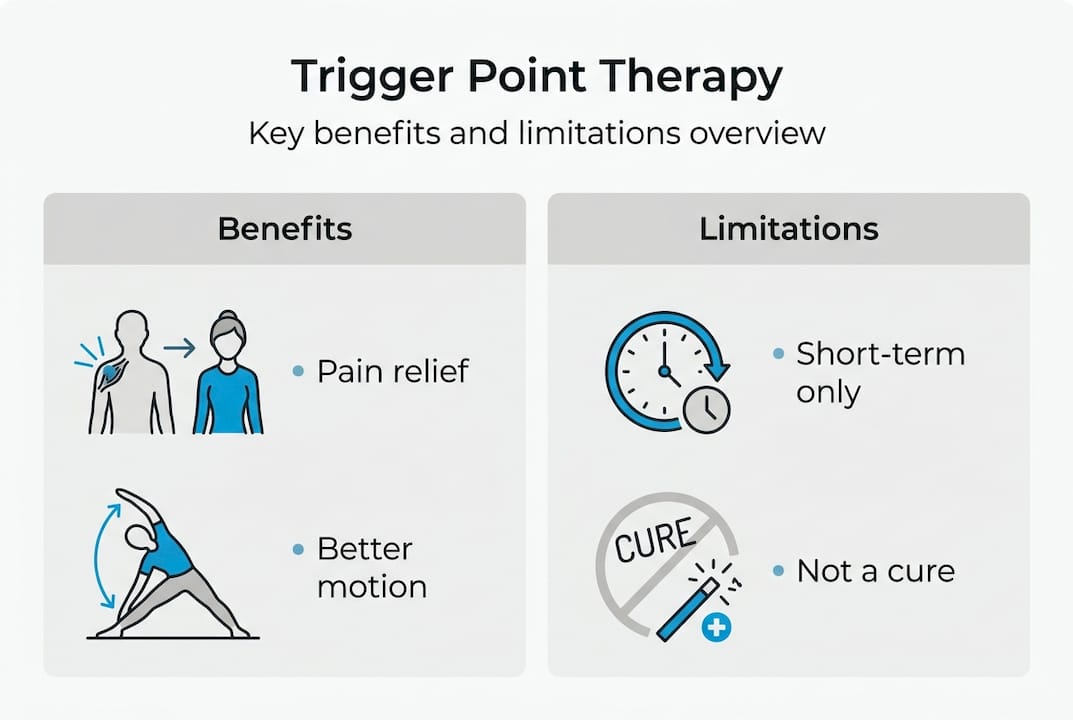
The research paints an encouraging picture, particularly for short-term outcomes. Ischemic compression and dry needling show moderate to strong evidence for pain reduction and improved range of motion in multiple muscle groups. These are not minor effects. For someone who has been dealing with chronic neck stiffness or recurring lower back tightness, even a moderate reduction in pain can meaningfully improve daily function.
Here’s a summary of the primary evidence-based benefits:
| Benefit | Evidence level | Notes |
|---|---|---|
| Pain reduction | Moderate to strong | Consistent across multiple techniques |
| Improved range of motion | Moderate to strong | Most pronounced immediately post-treatment |
| Reduced post-exercise soreness | Moderate | Greatest effect at 24 to 72 hours |
| Headache relief | Moderate | Particularly cervicogenic and tension-type |
| Chronic myofascial pain | Moderate | Best when combined with rehab exercises |
| Post-delivery pelvic dysfunction | Emerging | Paired with pelvic floor exercises |
Beyond the numbers, real-world applications are broad. Athlete results consistently show that integrating trigger point work into training cycles reduces recovery time and supports better movement quality. For desk workers, regular sessions targeting the neck and upper back can prevent the chronic tension that builds from hours of screen time.
Key benefits include:
- Faster recovery from exercise-induced soreness, particularly when applied within 24 to 72 hours of intense training
- Improved flexibility and joint range of motion, which supports both athletic performance and injury prevention
- Reduced frequency and intensity of tension headaches, especially those originating from the suboccipital muscles at the base of the skull
- Relief from chronic myofascial pain when combined with stretching and strengthening protocols
- Support for post-delivery pelvic floor recovery when used alongside targeted exercises
The limitations are equally important to understand. Trigger point therapy is not a standalone cure. Research consistently shows that the best outcomes come when therapy is paired with rehab protocols that include posture correction, progressive strengthening, and mobility work. Treating the knot without addressing what caused it in the first place leads to recurrence.
Precautions matter too. Therapy on sensitive areas can cause bruising if pressure is too aggressive, particularly over bony prominences or superficial nerves. People with bleeding disorders, active inflammation, skin infections, or certain cardiovascular conditions should consult a healthcare provider before starting any manual therapy program. Trigger point therapy is powerful, but it works best as one tool within a broader recovery strategy.
Getting started: safe and effective home techniques
Equipped with clear benefits and cautions, here’s exactly how to start trigger point therapy on your own.
The barrier to entry is low. You don’t need a clinic or expensive equipment to get meaningful results. What you do need is a consistent protocol, the right tool for your target area, and the patience to apply steady pressure rather than aggressive force.
Step-by-step home protocol:
- Identify the target muscle. Use your knowledge of referred pain patterns or simply press along the muscle until you find a tender spot. Common locations include the upper trapezius, glutes, hip flexors, and the muscles along the spine.
- Position yourself for access. Use a wall, the floor, or a chair to position your body so the tool can reach the target spot with your own body weight providing the pressure.
- Apply firm, sustained pressure for 30 to 90 seconds. Simple protocols using balls or rollers applied 3 to 5 times per day are effective for most users. Stay within a pain range you can breathe through comfortably.
- Move slowly off the point. Don’t snap away. Ease off the pressure and let the tissue respond.
- Follow with gentle active movement. Rotate the joint, do a light stretch, or simply walk around for a minute. Movement reinforces the release.
Tools that work well at home:
- Lacrosse balls or tennis balls for smaller muscles like the glutes, feet, and upper back
- Foam rollers for larger muscle groups like the quads, hamstrings, and thoracic spine
- Specialized deep tissue massage devices for precision targeting in areas like the hip flexors, psoas, and paraspinal muscles
- Handheld massage sticks for calves, IT bands, and forearms
Safety rules to follow every time:
- Never apply direct pressure over bone, joints, or visible veins
- Avoid areas with open wounds, bruising, or acute inflammation
- Do not use on injuries without clearance from a medical professional
- Start with lighter pressure and progress gradually over several sessions
- Stop immediately if you feel sharp, shooting, or nerve-type pain
For athlete integration, trigger point work fits naturally into both warm-up and cool-down routines. Pre-training, it activates underused muscles and improves range of motion without reducing strength. Post-training, it accelerates recovery by reducing the buildup of tension that leads to soreness. Special populations including older adults, postpartum individuals, and people returning from injury benefit most from starting with lighter pressure and shorter hold times, then progressing gradually.
Pro Tip: Consistency matters far more than intensity. A daily 10-minute session at moderate pressure will outperform an occasional aggressive session every time. Build trigger point work into your morning or evening routine the same way you would stretching or mobility work, and the results will compound over weeks.
Why trigger point therapy is misunderstood—and what really works
Most people approach trigger point therapy with one of two mindsets: they either expect instant, dramatic relief after a single session, or they press so hard they leave themselves bruised and sore. Both approaches miss the point.
The real value of trigger point therapy comes from consistent, moderate stimulation over time. The muscle system is adaptive. It responds to repeated, gentle input far better than it responds to occasional brute force. Chasing pain, meaning pressing harder and harder on the most sensitive spots, often increases local inflammation rather than reducing it. That cycle leads to frustration and abandonment of an otherwise effective practice.
The other common mistake is treating trigger point therapy as a complete solution. It isn’t. A released knot will return if the underlying cause, whether that’s poor posture, muscle weakness, or movement patterns, goes unaddressed. The people who get lasting results are the ones who pair their pressure work with corrective exercise, listening to their body for early warning signs, and adjusting their training or work habits accordingly.
Think of trigger point therapy as a reset button, not a cure. It clears the tension that has accumulated so your other efforts, stretching, strengthening, and movement practice, can actually take hold. Used that way, it becomes one of the most practical and cost-effective tools in any recovery toolkit.
The next step: tools and support for your trigger point therapy journey
Ready to put what you’ve learned into practice? Having the right tool makes trigger point therapy more precise, more comfortable, and easier to maintain consistently.

Thrival’s Deep Tissue Pro device is engineered for targeted muscle release across the back, hips, neck, and shoulders. It’s built in the US, FDA-registered, and designed to deliver professional-grade pressure with the convenience of home use. For precision targeting, the Bullseye Attachments replicate the focused contact of a thumb or knuckle, ideal for reaching deep tissue in hard-to-access areas. Pair your device with Thrival’s instructional app and routines to build a structured, effective recovery practice from day one. Free shipping and a lifetime warranty mean you can invest with confidence.
Frequently asked questions
What conditions can trigger point therapy help with?
Trigger point therapy can benefit muscle pain, tension headaches, chronic myofascial pain, and post-delivery pelvic discomfort, especially when combined with targeted exercises and movement rehabilitation.
How often should I perform trigger point therapy at home?
Applying pressure to each trigger point for 30 to 90 seconds, repeated 3 to 5 times per day, is a widely recommended starting protocol for most users.
Are there risks or side effects from trigger point therapy?
Applying too much pressure or working over sensitive areas can cause bruising or temporary soreness. Avoid bones, superficial nerves, and inflamed tissue, and seek medical guidance if you’re unsure about a specific area.
Is trigger point therapy safe for everyone?
Most healthy adults can use trigger point therapy safely, but those with acute injuries, bleeding disorders, active infections, or cardiovascular conditions should consult a healthcare provider before starting.
Can I expect instant results from trigger point therapy?
Some users notice immediate softening or reduced tenderness after a single session, but consistent daily practice over several weeks produces the most reliable and lasting relief.