


Top stretching routines for recovery are gentle, controlled static stretches held for 20–60 seconds that target major muscle groups to reduce stiffness, enhance circulation, and support healing after physical activity or injury. Clinically, these routines are called therapeutic flexibility exercises, and current guidelines recommend 2–3 repetitions per muscle group per session. A 10–15 minute recovery routine that includes movements like Child’s Pose, hip flexor stretches, and spinal twists supports nervous system regulation and muscle tension release. Timing matters: starting too early after injury can worsen damage, while consistent daily practice accelerates healing. This guide covers the best recovery stretches, safe timing, physiological benefits, and common mistakes to avoid.
1. What are the top stretching routines for recovery?
The most effective post-workout stretching routines target the muscle groups most stressed during physical activity. Each stretch below uses static holds of 20–60 seconds with 2–3 rounds per muscle group. That combination reduces stiffness and measurably improves range of motion.
Pro Tip: Warm your muscles with 5 minutes of light walking or a warm shower before stretching. Warm muscles respond better to lengthening and release metabolic waste more efficiently.
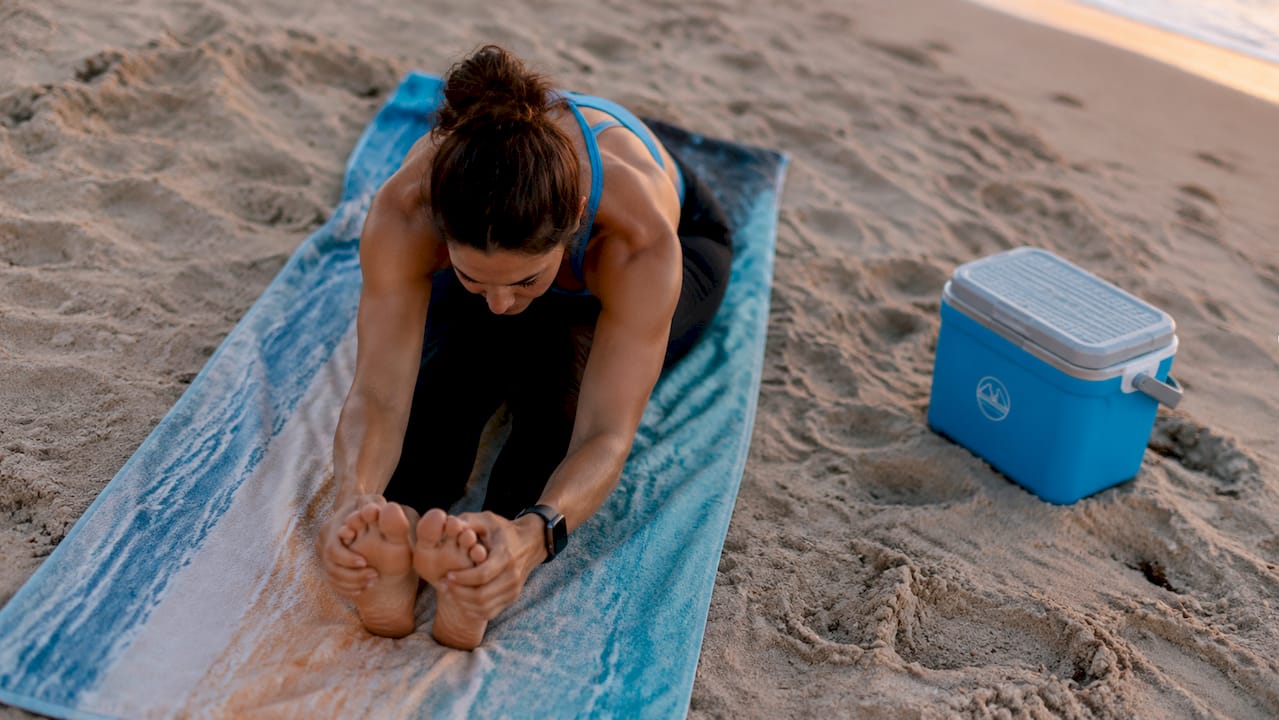
Supine hamstring stretch
Lie on your back and pull one leg toward your chest with a strap or towel behind the thigh. Keep the opposite leg flat on the floor. Hold 30–45 seconds per side, 2–3 rounds.
- Targets the biceps femoris, semimembranosus, and semitendinosus
- Reduces lower back tension linked to tight hamstrings
- Safe for post-run and post-leg-day recovery
Standing quad stretch
Stand near a wall for balance, bend one knee, and hold your ankle behind you. Keep your knees together and your hips level. Hold 30 seconds per side, 3 rounds.
- Releases the rectus femoris and vastus muscles
- Reduces anterior knee pain common after cycling or squatting
- Modify by lying on your side if balance is limited
Hip flexor lunge stretch
Step one foot forward into a low lunge and lower the back knee to the floor. Shift your hips forward gently until you feel a pull at the front of the rear hip. Hold 30–45 seconds per side.
- Targets the iliopsoas and rectus femoris
- Counteracts the shortening that occurs from prolonged sitting or running
- Pair with muscle tension relief techniques for desk workers
Standing calf stretch
Place both hands on a wall, step one foot back, and press the heel flat to the floor. Keep the back leg straight. Hold 30 seconds per side, 2–3 rounds.
- Calf stretches act as a circulation pump, aiding metabolic waste removal and reducing post-workout soreness
- Targets the gastrocnemius and soleus
- Particularly useful after running, hiking, or prolonged standing
Seated piriformis stretch
Sit on the floor with both legs extended. Cross one ankle over the opposite knee and gently press the raised knee down. Hold 30–45 seconds per side.
- Targets the piriformis and deep external hip rotators
- Relieves sciatic nerve tension common after heavy lower-body training
- Modify by performing the same position lying on your back
Child’s Pose
Kneel on the floor, sit back toward your heels, and extend both arms forward on the floor. Let your forehead rest down. Hold 30–60 seconds, 2–3 rounds.
- Decompresses the lumbar spine and stretches the thoracic extensors
- Calms the nervous system and lowers perceived muscle tension
- One of the most accessible flexibility routines for recovery
Supine spinal twist
Lie on your back, draw one knee to your chest, and guide it across your body to the opposite side. Extend both arms out and look away from the bent knee. Hold 30 seconds per side.
- Mobilizes thoracic and lumbar vertebrae
- Reduces rotational stiffness after rowing, golf, or asymmetric sports
- Avoid if you have acute disc issues
Doorway chest stretch
Stand in a doorway with both arms at 90 degrees on the frame. Step one foot forward and lean gently through the opening. Hold 20–30 seconds, 2–3 rounds.
- Opens the pectoralis major and anterior deltoid
- Corrects the forward shoulder posture common in swimmers and desk workers
- Pair with upper trap stretches for full shoulder girdle relief
Cross-body shoulder stretch
Bring one arm across your chest and use the opposite hand to press it closer to your body. Keep your shoulder down. Hold 20–30 seconds per side.
- Targets the posterior deltoid and rotator cuff
- Reduces shoulder stiffness after overhead pressing or throwing
- Safe for most shoulder conditions when kept pain-free
2. How to safely incorporate stretching into your recovery phase
The timing of stretching exercises for healing is as important as the stretches themselves. Gentle, pain-free movement starts around day 3–4 post-injury, once acute inflammation begins to subside. Stretching a fresh muscle strain within the first 48–72 hours can worsen tissue damage.
The recovery phase breaks into two stages:
- Acute phase (days 1–3): Rest, ice, compression, and elevation. No stretching.
- Subacute phase (days 3–7 onward): Begin gentle, pain-free active range of motion. Introduce static holds of 20–30 seconds.
Pro Tip: Pair each stretch with slow, controlled breathing. Exhale as you deepen the stretch. This activates the parasympathetic nervous system and reduces muscle guarding, allowing deeper tissue release without force.
Frequency matters as much as duration. Stretching 2–3 times daily produces better results than one long session. Keep sessions to 10–15 minutes and stop immediately if you feel sharp or shooting pain. For athletes returning from injury, sports injury recovery steps recommend avoiding full activity return before 4–6 weeks to reduce re-injury risk.
Static stretching post-workout is the right tool for recovery. Dynamic stretching, which involves controlled movement through a range of motion, belongs in warm-ups, not cool-downs. Mixing them up is one of the most common errors people make.
3. What are the physiological benefits of stretching for muscle recovery?
Stretching does more than reduce tightness. It triggers specific biological processes that speed tissue repair. Understanding these mechanisms helps you commit to the practice even when soreness is mild.
“Gentle static stretching stimulates collagen production and tissue repair without causing further damage when intensity remains low and pain-free. Stretching also promotes circulation, reduces scar tissue formation, and restores flexibility when performed carefully after the initial healing phase.”
— Clinical guidance on stretching injured muscles
Improved blood flow is the most immediate benefit. Stretching opens capillaries in the target muscle, delivering oxygen and nutrients while flushing out lactic acid and other metabolic byproducts. This is why post-workout soreness decreases faster with consistent stretching than with rest alone.
Collagen stimulation is the longer-term benefit. Gentle stretching supports collagen production in healing tissue, which strengthens the repair and reduces the formation of disorganized scar tissue. Disorganized scar tissue limits flexibility and increases re-injury risk, so this effect is clinically significant.
The nervous system also benefits. Slow, held stretches activate the Golgi tendon organ, a sensory receptor that signals the muscle to relax. This reduces chronic muscle guarding and lowers resting tension throughout the body. Physiotherapy research on injury prevention for athletes consistently identifies this nervous system regulation as a key factor in long-term recovery outcomes.
4. Common mistakes in recovery stretching routines and how to avoid them
Most recovery setbacks come from a small set of repeatable errors. Recognizing them protects your progress.
- Stretching too soon after injury. Applying static holds within the first 48–72 hours of a muscle strain inflames the tissue further. Wait until acute swelling subsides before starting any flexibility work.
- Confusing pain with productive discomfort. A mild pulling sensation is normal. Sharp, shooting, or worsening pain signals tissue stress. Stop the stretch immediately if pain intensifies.
- Using dynamic stretches for cool-down. Dynamic movements like leg swings and arm circles prime muscles for activity. They do not promote the tissue lengthening needed for recovery. Use static holds post-workout.
- Holding stretches for less than 20 seconds. Holds under 20 seconds do not produce lasting changes in muscle length or tension. The minimum effective hold is 20–30 seconds, with 30–60 seconds being more effective for recovery.
- Skipping the warm-up. Cold muscles resist lengthening and tear more easily. A 5-minute walk or warm shower before stretching reduces this risk significantly.
- Stretching aggressively to speed healing. Overly aggressive stretching triggers inflammation and can worsen the original injury. Gentle, consistent effort outperforms forceful, infrequent sessions every time.
- Neglecting frequency. One long stretching session per week produces minimal recovery benefit. Two to three short sessions daily, each 10–15 minutes, deliver far better results.
For desk workers and athletes alike, a step-by-step guide to easing muscle tension can help build the habit of consistent, correctly timed stretching.
Key Takeaways
The most effective recovery stretching routines combine static holds of 20–60 seconds, performed 2–3 times daily, targeting key muscle groups while avoiding any movement that causes sharp pain.
| Point | Details |
|---|---|
| Hold time matters | Static stretches need 20–60 seconds per side to produce lasting flexibility and tension relief. |
| Timing is critical | Avoid stretching a fresh strain in the first 48–72 hours; begin gentle movement around day 3–4. |
| Static beats dynamic post-workout | Save dynamic stretches for warm-ups; use static holds exclusively during recovery sessions. |
| Frequency over intensity | Two to three short daily sessions outperform one long, aggressive session every time. |
| Collagen and circulation | Gentle stretching stimulates collagen production and improves blood flow, both essential for tissue repair. |
What I’ve learned about stretching for recovery after years of watching people get it wrong
Most people treat stretching as an afterthought. They finish a workout or come home from a long day and spend 90 seconds pulling at a hamstring before moving on. That approach produces almost no recovery benefit and, after an injury, it can actually slow healing.
The single biggest shift I’ve seen in people who recover well is patience with hold time. Thirty seconds feels long when you’re standing in a gym parking lot. But that duration is where the nervous system actually releases its grip on the muscle. Anything under 20 seconds is essentially just checking a box.
The second thing I’ve noticed is that people conflate discomfort with progress. Pushing into pain during a stretch does not accelerate healing. It triggers a protective contraction that makes the muscle tighter. The goal is to find the edge of a comfortable pull and breathe there. That’s where real tissue change happens.
Combining stretching with other recovery methods, like targeted deep tissue work on tight spots, produces results that neither approach achieves alone. Stretching lengthens the muscle. Targeted pressure releases the adhesions and knots that stretching alone cannot reach. If you’re serious about recovery, you need both.
Finally, if you’re recovering from an actual injury rather than general post-workout soreness, consult a physical therapist before building your routine. Clinical guidance on eccentric training for tendon health shows that loading and stretching protocols need to match the specific tissue involved. Generic routines work for general recovery. Injury-specific recovery deserves a tailored plan.
— Cameron
How Thrival tools work alongside your stretching routine
Stretching lengthens muscle fibers and improves circulation. But tight spots, adhesions, and deep tissue knots often need direct pressure to fully release. That’s where Thrival’s recovery system fits in.

The Thrival Deep Tissue Pro is a non-motorized recovery board with interchangeable attachments, including the Wave, Bullseye, Arch, and Ballhead, each designed to target specific muscle groups in the back, hips, neck, and shoulders. It’s FDA-registered, US-manufactured, and built for daily use. Pair it with the stretching routines above: use the Thrival system first to release deep tissue tension, then follow with static stretches to lock in length and mobility. Free shipping and a lifetime warranty come standard.
FAQ
How long should I hold a recovery stretch?
Hold each static stretch for 20–60 seconds per side and complete 2–3 rounds per muscle group. Holds under 20 seconds do not produce lasting changes in muscle length or tension.
When can I start stretching after a muscle strain?
Begin gentle, pain-free movement around day 3–4 post-injury, once acute swelling subsides. Avoid any stretching in the first 48–72 hours, as it can worsen tissue damage.
What is the difference between static and dynamic stretching for recovery?
Static stretching, held for 20–60 seconds, is the correct tool for post-workout recovery and injury healing. Dynamic stretching suits warm-ups before activity, not cool-downs.
How often should I stretch during recovery?
Stretch 2–3 times daily in sessions of 10–15 minutes each. Short, frequent sessions produce better recovery outcomes than one long, infrequent session.
Does stretching actually speed up muscle recovery?
Yes. Gentle static stretching improves blood flow, removes metabolic waste, stimulates collagen production, and reduces muscle guarding through nervous system regulation, all of which accelerate tissue repair.