


Neck pain relief is achievable through a structured sequence of self-care, targeted exercise, and ergonomic correction. Most mild to moderate cases resolve within 2 to 3 weeks when you apply the right treatments in the right order. This neck pain relief guide draws on clinical guidance from Mayo Clinic, Harvard Health, and Mass General Brigham to give you a clear, step-by-step path from acute pain to lasting recovery. Whether you are dealing with a stiff neck from poor posture, a muscle strain from sleeping wrong, or chronic tension from desk work, the strategies here address the root causes, not just the symptoms.
What does a neck pain relief guide actually cover?
Cervical pain management is the clinical term for what most people call neck pain treatment. It covers everything from the first 48 hours of acute pain through long-term prevention. The goal is to reduce inflammation, restore range of motion, strengthen supporting muscles, and correct the habits that caused the problem in the first place. This guide follows that exact sequence.
Approximately 15% of adults experience neck pain at any given time, making it one of the most common musculoskeletal complaints. That number reflects how much of modern life loads the cervical spine. Improving neck muscle fitness is one of the most effective ways to treat and prevent non-serious neck pain, which means passive treatments alone will not get you there.
How to use ice, heat, and medications for early relief
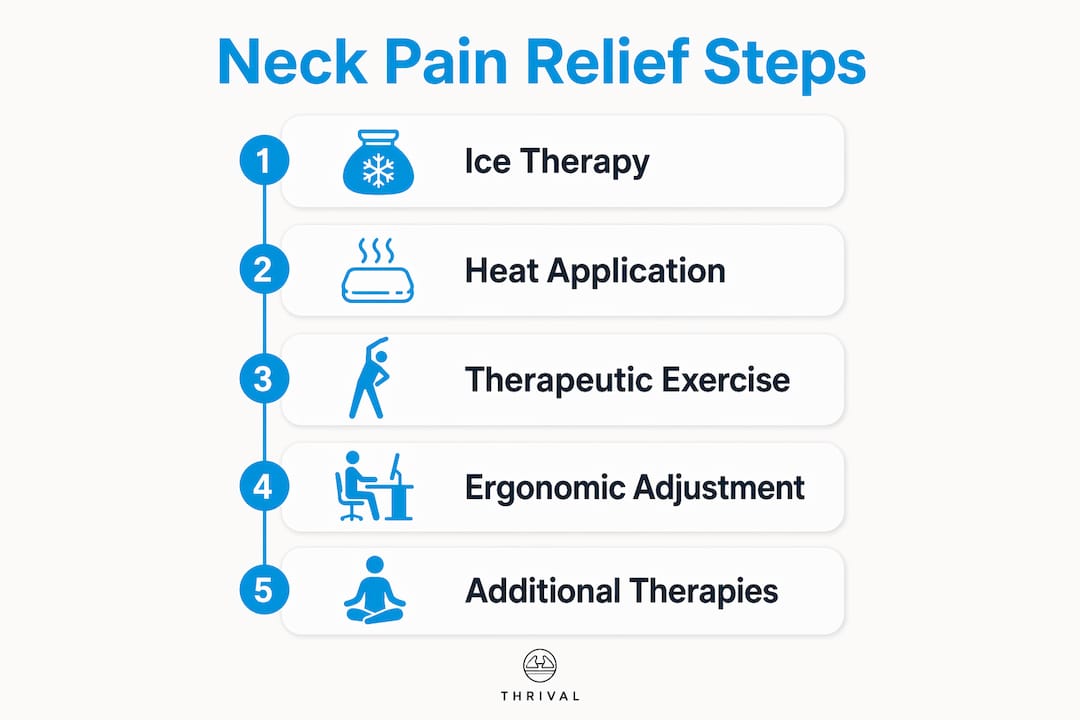
The first 48 hours after a neck strain or acute flare-up require a specific approach. Cold therapy reduces inflammation and numbs sharp pain. Heat therapy relaxes muscle spasm and improves circulation. Using them in the wrong order, or skipping one entirely, slows recovery.
Here is the correct sequence:
- Ice first: Apply ice wrapped in a towel for up to 15 minutes, several times daily, during the first 48 hours. Never apply ice directly to skin. The towel barrier prevents frostbite and tissue damage.
- Switch to heat: After the acute inflammation phase passes, use a heating pad or warm shower to relax tight muscles. Heat increases blood flow and reduces stiffness, which prepares the area for gentle movement.
- OTC medications: Ibuprofen (Advil, Motrin) reduces both pain and inflammation. Acetaminophen (Tylenol) manages pain without anti-inflammatory effects. Use either as directed on the label and avoid combining them without medical guidance.
- Skin protection: Whether using heat or cold, check skin every five minutes. Redness or numbness means remove the source immediately.
Pro Tip: Set a timer when using ice or heat. Fifteen minutes feels short, but going longer does not speed healing. It increases the risk of skin damage and can actually worsen inflammation.
Timing and sequencing of ice, heat, and exercise are crucial to avoid prolonging symptoms. Skipping the ice phase and going straight to heat during active inflammation is one of the most common mistakes people make in the first day or two.
What exercises relieve neck pain and how do you progress safely?
Exercise is the most reliable long-term neck pain solution, but the type and timing of movement matters. Starting too aggressively during acute pain worsens symptoms. Starting too late allows muscles to weaken and stiffen. The goal is gentle, progressive loading.
Follow this progression:
- Gentle range-of-motion movements: Begin with slow neck tilts (ear to shoulder), forward bends (chin to chest), and side rotations as pain allows. Move only within a comfortable range. These movements prevent stiffness without stressing inflamed tissue.
- Chin tucks: Sit upright, gently pull your chin straight back (not down), hold for five seconds, and release. This resets cervical alignment and activates deep neck flexors. Repeat 10 times, twice daily.
- Shoulder rolls: Roll both shoulders backward in slow circles, 10 repetitions. This releases tension in the upper trapezius and levator scapulae, two muscles that directly affect neck stiffness. These double as shoulder pain relief tips for anyone carrying tension in the upper back.
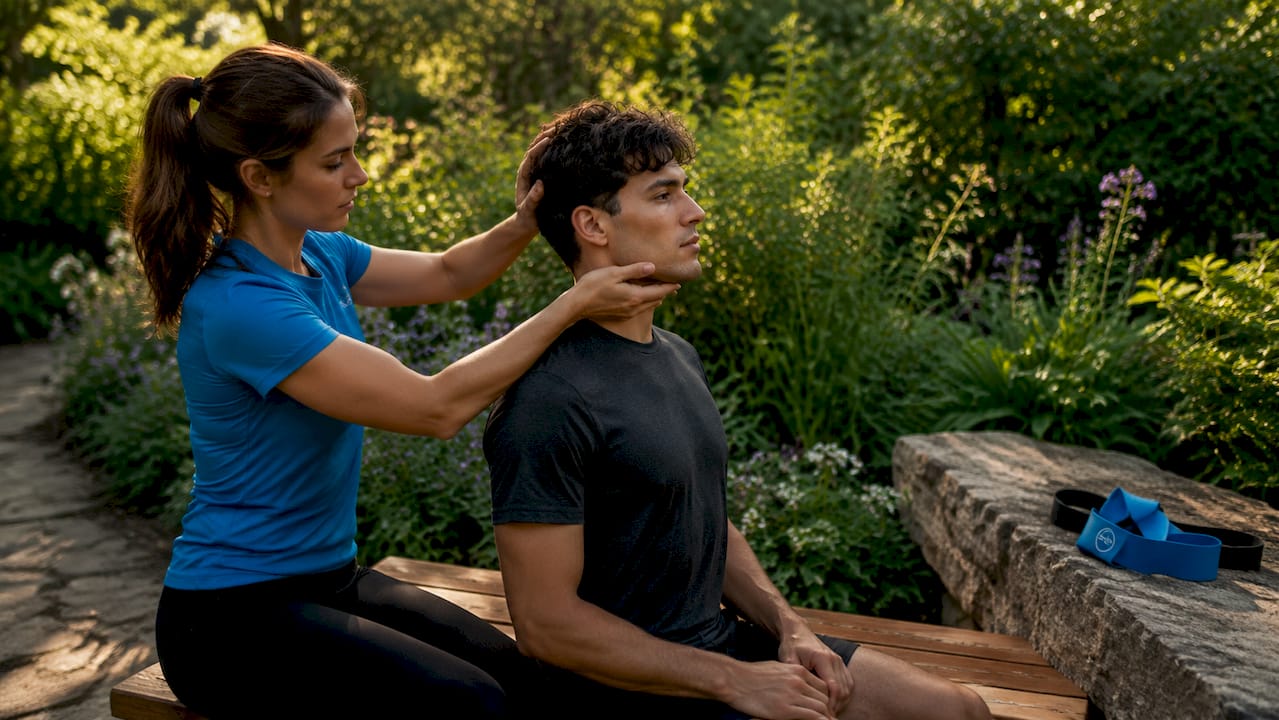
- Isometric exercises: Press your palm against your forehead without moving your head. Hold for five seconds. Repeat on each side and at the back of the head. Isometric work builds muscle strength without joint movement, making it safe during the early recovery phase.
- Dynamic strengthening: Once acute pain subsides, add resistance band exercises for the neck and upper back. Rows, face pulls, and band pull-aparts build the posterior chain muscles that support cervical posture.
Physical therapy with guided therapeutic exercises, including stretching and strengthening, is considered the most reliable way to ensure your program is appropriate and safely progressive. A physical therapist can also identify muscle imbalances that home exercise alone might miss.
Pro Tip: Avoid aggressive stretching while pain is severe. Pulling a stiff, inflamed muscle further into its range of motion triggers a protective spasm response that increases pain and delays healing. Gentle movement within a pain-free range is always the right starting point.
How do ergonomic adjustments support recovery and prevent recurrence?
Ergonomics is the most overlooked component of any neck stiffness relief plan. You can do every exercise correctly and still re-injure yourself if your workstation, sleep setup, or daily habits keep loading the cervical spine in the wrong way.
The key adjustments to make:
- Screen height: Your monitor should sit at eye level so your head stays in a neutral position. A screen that is too low forces the chin forward and down, adding significant load to the cervical spine.
- Keyboard and mouse position: Keep both close enough that your elbows stay at roughly 90 degrees. Reaching forward for your keyboard rounds the shoulders and pulls on the neck.
- Microbreaks every 20 minutes: Frequent position changes with simple neck and shoulder movements help prevent stiffness. Mass General Brigham specifically recommends this microbreak approach to reduce cumulative neck loading throughout the day. Set a phone timer or use a desktop reminder app.
- Pillow support: Use a pillow that keeps your head aligned with your spine when side sleeping. A pillow that is too thick or too flat forces the neck into lateral flexion for hours at a time.
- Phone habits: Holding a phone between your ear and shoulder, or looking down at a screen for extended periods, creates the same forward-head posture as a poorly positioned monitor.
Staying active and continuing normal activities generally reduces the risk of prolonged neck pain and stiffness. NCBI clinical guidance is clear on this point: rest is not the answer. Movement, within tolerable limits, is.
| Ergonomic factor | Recommended adjustment |
|---|---|
| Monitor height | Top of screen at eye level |
| Microbreak frequency | Every 20 minutes with neck/shoulder movement |
| Sleep pillow | Neutral spine alignment, matched to sleep position |
| Phone use | Hold at eye level, avoid shoulder-cradling |
| Seated posture | Feet flat, lumbar supported, shoulders relaxed |
When should you consider additional therapies?
Most neck pain responds to self-care and exercise. When it does not, or when symptoms are severe from the start, additional therapies become relevant. Knowing which options are evidence-backed and which carry risk helps you make better decisions.
Neck collars: Soft neck collars can relieve pressure short-term but should not be worn more than three hours a day or longer than one to two weeks. Extended use weakens the neck muscles you need for long-term stability. Treat a collar as a temporary tool, not a solution.
Physical therapy: A licensed physical therapist can provide ultrasound therapy, cervical traction, and a supervised exercise program tailored to your specific condition. Home traction devices may increase nerve irritation if used without expert supervision. Dosing and direction matter significantly with traction.
Alternative therapies: Acupuncture, therapeutic massage, tai chi, and yoga all show benefit for neck stiffness and chronic pain in clinical literature. These approaches work best as complements to exercise and ergonomic correction, not replacements. For shoulder pain relief methods that also address neck tension, yoga poses targeting the upper back and thoracic spine are particularly effective.
Steroid injections: Advanced treatments like steroid injections are options when other therapies fail for severe or persistent symptoms. They reduce inflammation directly at the pain source and are typically combined with a numbing agent. These are reserved for cases that do not respond to conservative care.
The comparison below outlines when each therapy tier is appropriate:
| Therapy type | Best used when | Key caution |
|---|---|---|
| Ice and heat | First 48 hours to 2 weeks | Protect skin; follow timing rules |
| OTC medications | Acute to subacute pain | Follow label dosing; avoid long-term use |
| Physical therapy | Pain persists beyond 2 weeks | Requires professional supervision |
| Neck collar | Short-term acute relief only | Limit to 3 hours/day, max 2 weeks |
| Acupuncture or massage | Chronic stiffness, adjunct care | Does not replace active exercise |
| Steroid injections | Severe, treatment-resistant cases | Medical supervision required |
Common mistakes that prolong neck pain
Most people make at least one of these errors during recovery. Recognizing them early prevents weeks of unnecessary setbacks.
- Resting too long: Prolonged immobilization weakens neck muscles and increases stiffness. Changing position and activating shoulder and neck muscles frequently breaks the pain cycle more effectively than passive rest.
- Overusing a neck collar: Wearing a collar throughout the day for weeks leads to muscle atrophy. Use it for short periods during acute flare-ups only.
- Aggressive stretching during acute pain: Forcing range of motion while inflamed triggers protective muscle spasm. Wait until the acute phase passes before pushing into stretch.
- Relying only on massage: Over-reliance on massage or rapid chiropractic neck manipulation does not address root causes and carries its own risks. High-speed cervical manipulation may compress vertebral arteries in rare cases.
- Ignoring ergonomics: Treating pain without fixing the workstation or sleep setup that caused it guarantees recurrence.
Pro Tip: If your symptoms are not improving after two weeks of consistent self-care, or if you experience numbness, tingling, or weakness in your arms, see a physician. These signs suggest nerve involvement that requires professional evaluation.
Key takeaways
Effective neck pain relief requires combining early ice and heat therapy, progressive exercise, and ergonomic correction in the right sequence rather than relying on any single approach.
| Point | Details |
|---|---|
| Ice before heat | Use ice for the first 48 hours, then switch to heat as inflammation subsides. |
| Exercise progression | Start with chin tucks and gentle tilts before advancing to strengthening work. |
| Microbreaks matter | Change position every 20 minutes to prevent cumulative cervical loading. |
| Collar limits | Soft collars should not exceed 3 hours daily or 2 weeks total use. |
| Active recovery wins | Staying mobile reduces prolonged pain risk more than passive rest or massage alone. |
What I’ve learned about neck pain that most guides get wrong
Most neck pain content focuses on what to do. Very little addresses the sequence in which to do it, and that gap is where most people stall.
I have seen people skip the ice phase entirely because heat “feels better.” It does feel better in the moment, because heat relaxes muscle spasm. But applying heat to an actively inflamed tissue in the first 24 to 48 hours increases blood flow to an already swollen area and extends the inflammatory response. The short-term comfort comes at the cost of a longer recovery.
The same logic applies to exercise. Chin tucks and isometric holds feel almost too simple. People want to stretch aggressively because it feels like they are doing something. But aggressive stretching during acute cervical pain triggers a protective spasm that is harder to resolve than the original strain. The gentle movement approach is not a compromise. It is the correct clinical sequence.
The other thing most guides underemphasize is the role of the upper back and shoulders in neck pain. The levator scapulae and upper trapezius connect the shoulder girdle to the cervical spine. When those muscles are tight or weak, the neck compensates. Shoulder pain relief methods that target the posterior chain, like face pulls and band rows, directly reduce cervical loading. Treating the neck in isolation misses half the picture.
Patience is the hardest part. Most people feel significant improvement within two to three weeks of consistent self-care. That timeline feels long when you are in pain, but it is realistic. The goal is not to rush recovery. It is to avoid the mistakes that extend it.
— Cameron
Support your recovery with Thrival

The exercises and self-care steps in this guide work best when your muscles are ready to respond. Thrival’s Deep Tissue Pro is a non-motorized deep tissue therapy system built specifically for targeted muscle release in the neck, shoulders, and upper back. The base board accepts four interchangeable attachments, including the Thrival Wave, Bullseye, Arch, and Ballhead, so you can address specific tight spots with precision. It is FDA-registered, made in the US, and backed by a lifetime warranty. Use it alongside your muscle therapy routine to prepare muscles before exercise and accelerate recovery after. Free shipping included.
FAQ
How long does neck pain typically take to resolve?
Most mild to moderate neck pain improves within 2 to 3 weeks with consistent self-care including ice, heat, OTC medications, and gentle movement. Cases involving nerve compression or structural issues may take longer and require professional evaluation.
What is the best home remedy for a stiff neck?
Apply ice wrapped in a towel for 15 minutes several times in the first 48 hours, then switch to heat. Combine this with gentle chin tucks and slow range-of-motion movements to restore mobility without aggravating inflammation.
Can I use a neck collar to sleep?
Soft neck collars should not be worn more than three hours a day or longer than one to two weeks total. Wearing one during sleep is generally not recommended, as it limits the natural movement your neck makes during rest and can weaken supporting muscles over time.
When should I see a doctor for neck pain?
See a physician if pain does not improve after two weeks of self-care, or if you experience numbness, tingling, or weakness in your arms or hands. These symptoms may indicate nerve root compression or a herniated cervical disc requiring imaging and medical management.
Do shoulder exercises help with neck pain?
Yes. The upper trapezius and levator scapulae muscles connect the shoulder girdle directly to the cervical spine. Shoulder pain relief methods like band rows, face pulls, and shoulder rolls reduce tension that loads the neck, making them a practical part of any cervical recovery program.