


Massage devices are mechanical tools that apply percussive or vibration therapy directly to muscle tissue to reduce soreness, improve circulation, and restore range of motion. The advantages of massage devices go well beyond simple relaxation. Research shows consistent use can reduce muscle soreness by up to 30%, making them a practical tool for athletes, desk workers, and anyone dealing with chronic muscle tension. Brands like Theragun and tools like the Thrival Deep Tissue Pro have brought professional-grade muscle therapy into everyday use, backed by growing clinical evidence.
1. What are the top advantages of using massage devices for muscle health?
Massage devices deliver targeted relief where your muscles need it most. The core benefits cover soreness reduction, circulation, flexibility, pain relief, and stress reduction. Each one compounds the others when you use your device consistently.
- Soreness reduction. Percussion therapy reduces delayed-onset muscle soreness (DOMS) and improves range of motion after workouts. DOMS is the deep ache you feel 24–48 hours after exercise. Cutting that recovery window shortens the time between productive training sessions.
- Improved circulation. Massage devices increase local blood flow and metabolic activity in muscles. Better circulation means faster delivery of oxygen and nutrients to fatigued tissue.
- Greater flexibility. Regular use loosens tight connective tissue and reduces stiffness in the muscle belly. Athletes who add massage tools to their warm-up routines report noticeably better range of motion.
- Localized pain relief. Percussive therapy produces neurological effects that alter pain perception, contributing to short-term relief. This is why a two-minute session on a tight trap or hip flexor can feel dramatically different from doing nothing.
- Stress and tension relief. Sustained vibration activates the parasympathetic nervous system. The result is a measurable drop in perceived tension, even after a short session.
Pro Tip: Use your device for 60–90 seconds on a single muscle group before moving on. Longer is not always better, and short, focused passes deliver the most consistent results.
2. How different device types affect their advantages
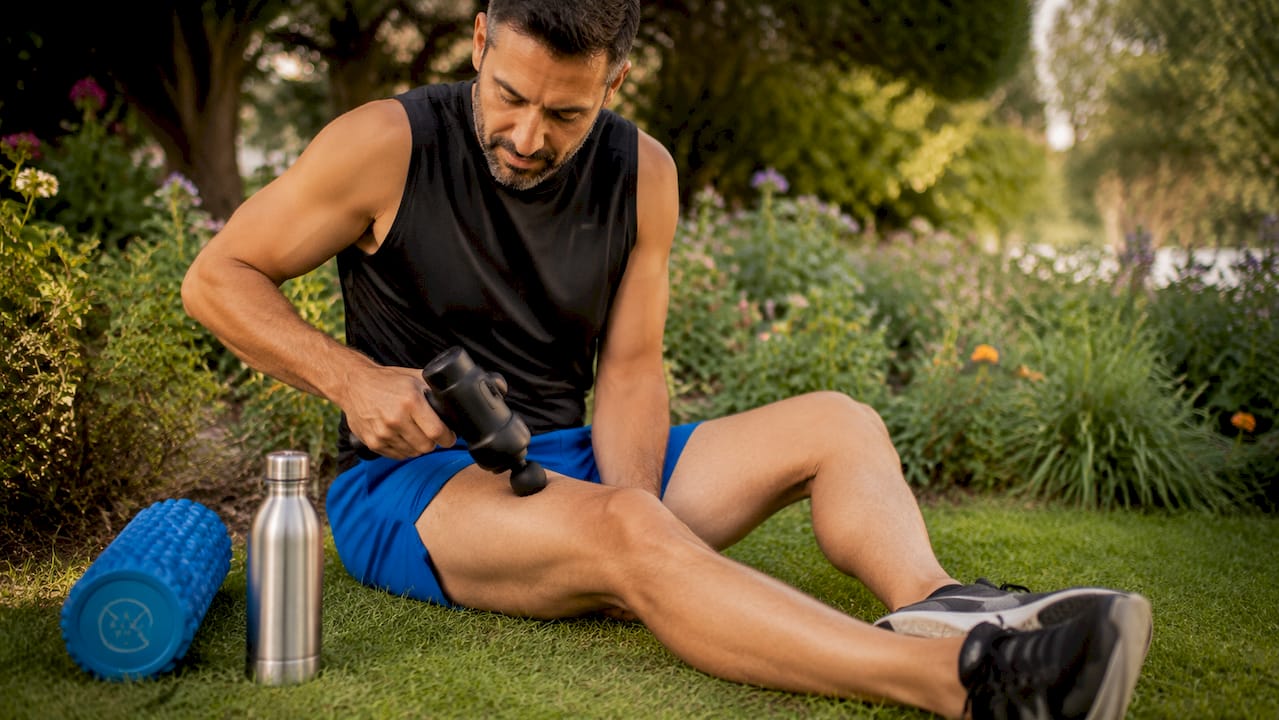
Not every massage device works the same way. The type of device you choose determines which muscles you can reach, how deep the pressure goes, and how practical the tool is for daily use.
| Device type | Best use | Key advantage | Limitation |
|---|---|---|---|
| Percussion massage gun | Large muscle groups, post-workout | Deep tissue penetration | Heavier, louder |
| Shiatsu cushion | Back and neck, seated use | Hands-free, relaxing | Less targeted |
| Foam roller | Full-body myofascial release | Low cost, wide coverage | No vibration benefit |
| Non-motorized board tool | Targeted spinal and hip release | Precise, silent, portable | Requires body weight |
| Mini massage gun | Travel, small muscle groups | Portability with effective relief | Lower amplitude |
The attachment head matters as much as the device type. A flat head spreads pressure across a broad area, while a bullet or ballhead concentrates force on a specific knot. Adjustable speeds and attachments let you tailor therapy to your exact needs, which improves both comfort and outcomes.
Speed settings also carry real clinical weight. Lower speeds between 17–40 Hz improve flexibility and aid recovery safely for daily use. Higher speeds are not always better. They can overstimulate tissue and cause soreness if used too aggressively or too long.
Device weight and grip design affect how long you can actually use the tool. A heavy gun held overhead for three minutes creates its own fatigue. Lighter tools and ergonomic grips make consistent daily use realistic rather than a chore.
3. How to safely integrate massage devices into your recovery routine
Timing and technique determine whether your device helps or hurts. The benefits of massage devices are real, but they depend on using the tool correctly.
- Before your workout. Use short, gentle passes over the muscles you plan to train. Two minutes per muscle group is enough to increase blood flow and reduce pre-exercise stiffness. Keep pressure light and speed low.
- After your workout. Spend more time on the muscles you worked hardest. Timing use appropriately, with gentle pre-workout and focused post-workout massage, maximizes the recovery benefit. Post-workout sessions can run 2–3 minutes per area.
- Avoid bony areas. Never apply a device directly to joints or bony prominences like the spine, knees, or elbows. Doing so risks bruising and soft tissue irritation. Stay on the muscle belly, not the bone.
- Focus on knot areas. Trigger points and tight spots respond well to sustained, moderate pressure. Hold the device on a knot for 10–15 seconds, then move on. Do not grind back and forth repeatedly.
- Build a daily ritual. Even five minutes of targeted work on your neck, hips, or lower back each morning or evening adds up. Consistent, gentle use beats occasional aggressive sessions every time.
Pro Tip: If an area feels bruised or more sore after using your device, reduce pressure and frequency. Overuse or improper technique can cause soft tissue irritation. Pain is a signal to back off, not push harder.
For desk workers dealing with chronic neck and shoulder tension, Thrival’s muscle recovery guide for desk workers covers targeted routines built around your specific posture patterns.
4. The cost-benefit of owning a massage device vs. professional therapy
A single professional massage session typically costs $60–$120. A quality home device costs more upfront but pays for itself quickly. Home massage devices can pay for themselves within months compared to frequent professional visits. That math becomes even clearer when you factor in scheduling, travel time, and the ability to use your device at 10 p.m. after a hard training day.
The advantages of portable massage tools extend beyond cost. You get access to muscle care on your schedule, without booking a week in advance. A good device also serves multiple roles: pre-workout activation, post-workout recovery, travel relief, and daily stress management.
- Anytime access. No appointments, no waiting rooms. Your device is ready when your muscles need it.
- Multiple applications. One tool handles warm-up, recovery, and relaxation. That versatility adds real value across your week.
- Travel convenience. Mini massage guns and non-motorized tools like Thrival’s system pack into a bag without adding significant weight. Recovery does not stop when you travel.
- Long-term durability. Quality devices built with durable materials and backed by warranties hold up to daily use for years. Thrival’s tools carry a lifetime warranty and are FDA registered, which reflects a commitment to safety and build quality.
Before buying, check the amplitude (how deep the head travels), the stall force (how much pressure it can sustain), and the attachment options. These three specs determine whether a device will actually reach deep tissue or just buzz on the surface. Reading verified reviews from athletes and physical therapists gives you a clearer picture than marketing copy alone. For a broader look at choosing the right tool, Thrival’s recovery tool guide breaks down the key differences by use case.
Pairing your device with good nutrition also accelerates recovery. Adequate protein intake for muscle repair works alongside mechanical therapy to rebuild tissue faster than either approach alone.
5. Massage devices work best as support tools, not standalone cures
The most important thing to understand about massage tools is their actual role. Massage devices work best as support tools rather than miracle cures, offering practical relief for muscle tightness and soreness. They do not replace sleep, movement, hydration, or progressive training. They make all of those things work better by reducing the friction of recovery.
Short, controlled sessions with light pressure improve muscle flexibility without irritation. That finding matters because it pushes back against the common instinct to use more pressure and more time. Gentle consistency outperforms aggressive occasional use in every clinical comparison.
The massage tools benefits you feel are real and measurable. But they require the same discipline as any other recovery practice: show up regularly, use good technique, and adjust based on how your body responds.
Key takeaways
Massage devices reduce soreness, improve circulation, and support faster recovery when used consistently with correct technique and appropriate pressure.
| Point | Details |
|---|---|
| Soreness reduction is proven | Consistent use cuts muscle soreness by up to 30%, shortening recovery time between sessions. |
| Speed settings matter | Frequencies of 17–40 Hz deliver safe, effective daily recovery without overstimulating tissue. |
| Technique prevents injury | Avoid bony areas and joints; focus on muscle bellies to prevent bruising and irritation. |
| Cost-benefit favors home devices | Quality devices pay for themselves within months by reducing the need for professional visits. |
| Consistency beats intensity | Short, regular sessions outperform occasional aggressive use for long-term muscle health. |
My take on massage devices after years of daily use
What I actually learned from using these tools every day
The biggest mistake I see people make with massage devices is treating them like a quick fix. They buy a gun, hammer a sore quad for ten minutes, and wonder why it feels worse the next day. The tool is not the problem. The approach is.
What actually works is boring by comparison: 60–90 seconds per muscle group, moderate pressure, done consistently every day. I started seeing real changes in my hip flexor tension and lower back stiffness only after I committed to a five-minute morning routine. Not a 30-minute session twice a week. Five minutes, every morning, without skipping.
The other thing nobody talks about is matching the tool to your actual problem. A percussion gun is great for large muscles like glutes and hamstrings. But for the deep hip rotators or the muscles along the spine, a non-motorized tool that uses your own body weight gives you far more control and precision. Thrival’s system, which uses a base board with swappable attachments like the Wave, Bullseye, and Arch, is built exactly for that kind of targeted work. You are not fighting the device to get the right angle. The design does that for you.
Combine your device with natural recovery methods like proper nutrition and sleep, and the results compound. Massage therapy alone is a floor, not a ceiling.
— Cameron
Thrival’s deep tissue tools for targeted muscle recovery
Muscle recovery works best when your tools match the specific area you are treating.
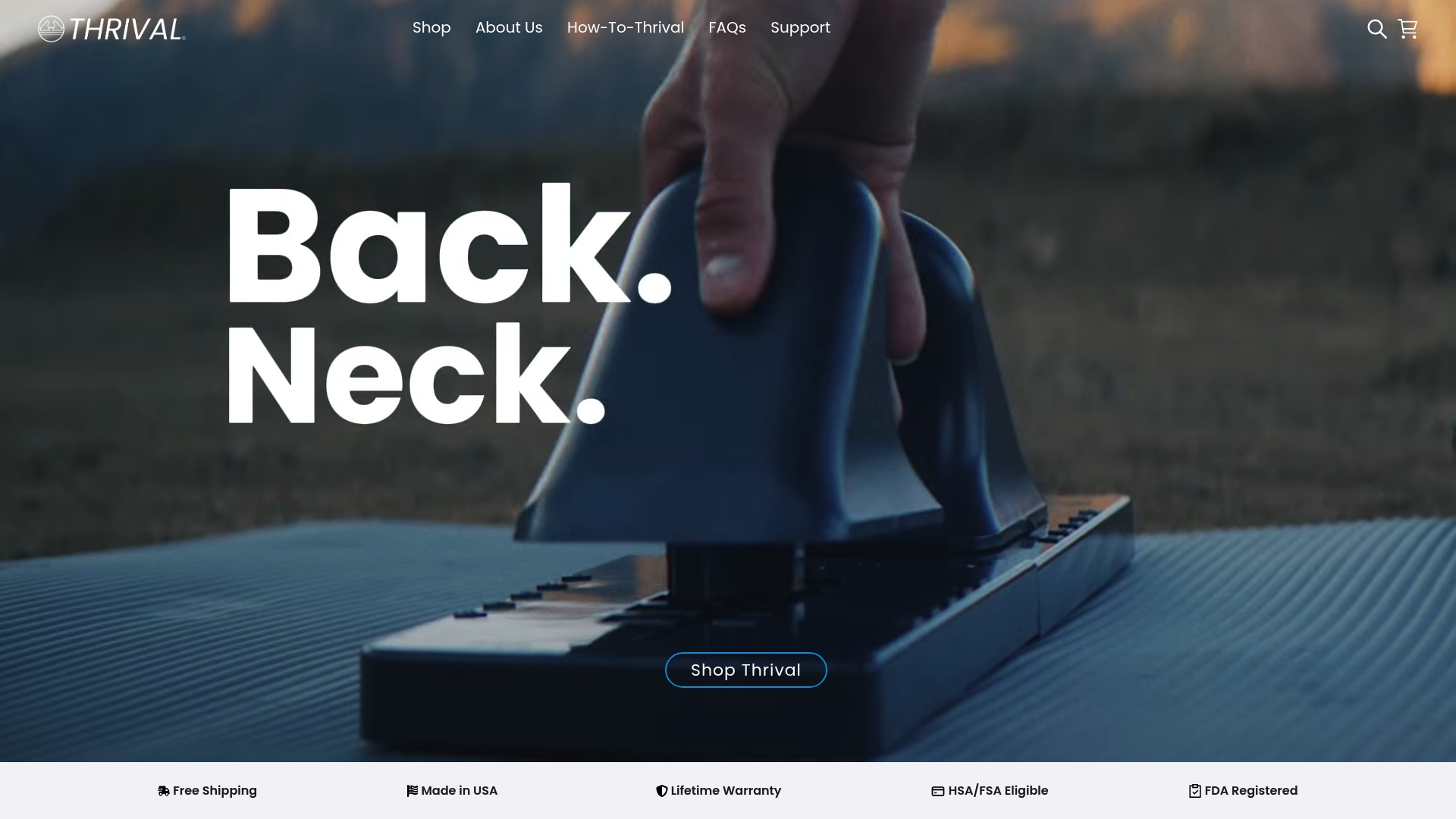
The Thrival Deep Tissue Pro is a non-motorized recovery system built around a single base board with interchangeable attachments. The Thrival Wave, Bullseye, Arch, and Ballhead attachments each target different muscle groups and depths, from broad back coverage to pinpoint trigger point release. The system is FDA registered, made in the US, and backed by a lifetime warranty. Free shipping is included on every order. For anyone dealing with back, hip, neck, or shoulder tension, it is a direct and durable solution built for daily use.
FAQ
How much can massage devices reduce muscle soreness?
Consistent use of massage tools can reduce muscle soreness by up to 30%, according to a 2026 report. This makes them effective for both athletes and people with active daily routines.
What speed setting is safest for daily use?
Speeds between 17–40 Hz improve flexibility and support recovery safely for daily use. Higher speeds are not necessary for most people and can irritate tissue if overused.
Can I use a massage device before a workout?
Yes. Short, gentle pre-workout sessions of about two minutes per muscle group increase blood flow and reduce stiffness. Keep pressure light and speed low to avoid fatiguing the muscle before exercise.
Are massage devices worth the cost compared to professional massage?
Home massage devices typically pay for themselves within months by reducing the need for professional therapy visits. They also provide anytime access without scheduling, which adds practical value beyond the price comparison.
What areas should I avoid with a massage device?
Avoid applying any massage device directly to bones, joints, or the spine. Focus on the muscle belly only. Applying pressure to bony areas risks bruising and soft tissue irritation.