


Ergonomics is the science of designing work environments and tasks to fit the human body, reducing physical stress and preventing pain before it starts. The role of ergonomics in pain prevention is well established: musculoskeletal disorders (MSDs) are among the most common and costly work-related injuries, and OSHA identifies poor ergonomic conditions as a primary driver. Recent 2026 clinical findings confirm that integrated ergonomic programs combining workstation changes with physical activity outperform any single intervention. For people managing chronic pain or discomfort, understanding how ergonomics works is the first step toward lasting relief.
How do ergonomic principles reduce musculoskeletal pain?
Ergonomics reduces musculoskeletal pain by fitting the work environment to the person’s anatomy and movement patterns, rather than forcing the body to adapt to a fixed setup. When your chair height, monitor position, and keyboard placement align with your body, your muscles hold less tension throughout the day. That reduction in sustained tension is what prevents cumulative strain from building into chronic pain.
Three core principles drive this process:
- Posture optimization: Keeping the spine in a neutral position reduces compressive load on discs and soft tissue. A monitor at eye level, for example, prevents the forward head posture that strains the cervical spine.
- Reducing repetitive strain: Awkward postures held repeatedly cause micro-damage to tendons and muscles. Ergonomic tool design, such as angled keyboards or vertical mice, keeps joints in their natural range of motion.
- Equipment adjustment: Adjustable chairs, monitor arms, and sit-stand desks allow you to match the workspace to your body dimensions, not the average body.
- Active movement: Repeated static postures accumulate muscle strain even in a well-set-up workspace. Changing position regularly is as important as the setup itself.
Pro Tip: Set a timer every 30 minutes to stand, stretch, or walk for two minutes. This single habit breaks the static load cycle that drives most desk-related back and neck pain.
The importance of ergonomic practices goes beyond comfort. When your body is not fighting poor positioning all day, you have more energy, better focus, and less pain by the end of your shift.
What are the most effective ergonomic interventions in 2026?
The strongest evidence from 2026 points clearly to one conclusion: multicomponent programs outperform single interventions for reducing musculoskeletal pain in office workers. A systematic review of 387 records confirmed that combining workstation changes with structured exercise and behavioral coaching produces the greatest reductions in pain and the best functional improvement. A single ergonomic chair, on its own, rarely moves the needle.
“Continuous ergonomic and physical activity interventions reduce musculoskeletal pain, decrease absenteeism, and delay the need for invasive procedures. One-off changes produce short-term gains that fade without ongoing reinforcement.”
2026 research on ergonomic program effectiveness
What does a multicomponent program actually look like in practice? The table below breaks down the key intervention types and their primary benefits.
| Intervention type | Primary benefit | Evidence strength |
|---|---|---|
| Workstation redesign | Reduces awkward postures and static load | High |
| Structured exercise program | Builds supporting muscle strength | High |
| Movement break protocols | Prevents cumulative strain from static postures | Moderate to high |
| Behavioral coaching | Improves adherence to ergonomic habits | Moderate |
| Organizational policy changes | Sustains program outcomes long term | Moderate |
Organizational-level interventions, including workspace policies and engineering controls, also show promising cost-effectiveness for managing low-back pain. That matters for people managing chronic pain on a budget. Spending on a well-designed program upfront reduces the cost of treatment, lost workdays, and invasive procedures later.
The key word in all of this is continuous. Research on ergonomic and physical activity programs shows that cervical and lumbar pain reductions are strongest when interventions run without interruption. A two-week ergonomic audit followed by no follow-up is not a program. It is a missed opportunity.
How do engineering controls differ from other ergonomic measures?
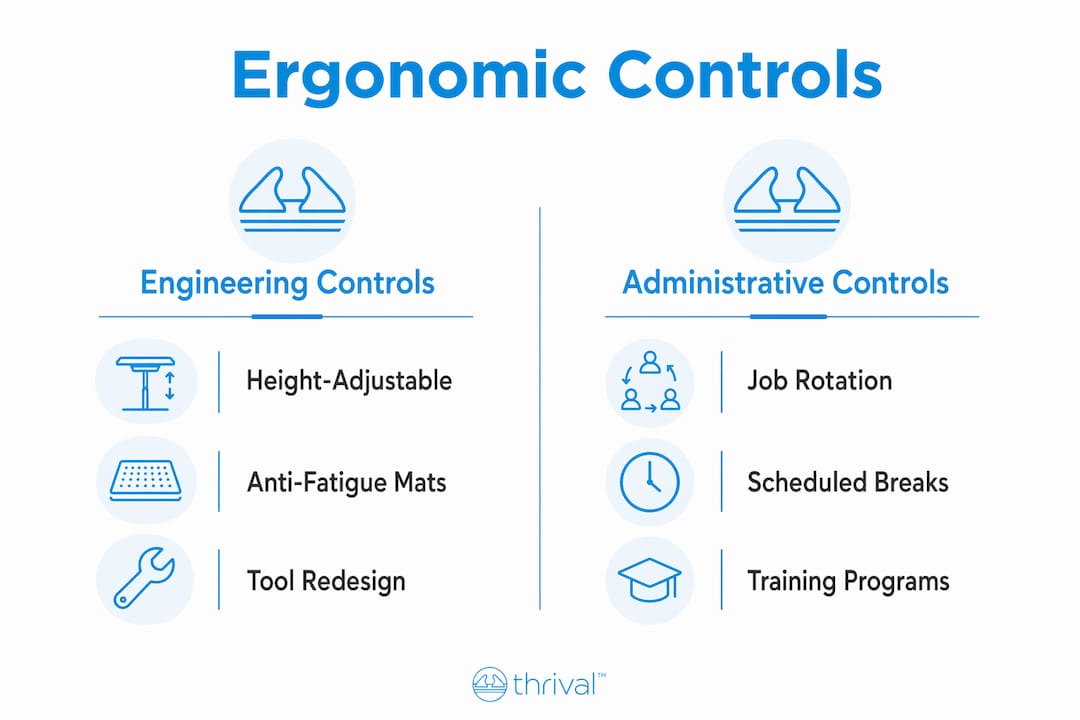
Ergonomic controls fall into three categories: engineering, administrative, and personal protective equipment (PPE). Understanding the difference tells you which investments actually prevent pain and which ones only manage it.
Engineering controls physically change the work environment. Examples include height-adjustable desks, anti-fatigue mats, tool redesign, and conveyor belt repositioning. These changes remove the hazard by design. Engineering controls are more effective and sustainable than administrative or PPE controls because they do not rely on worker behavior to function.

Administrative controls change how work is done. Job rotation, scheduled breaks, and training programs fall into this category. They reduce exposure to ergonomic hazards but depend entirely on consistent human behavior. When schedules get busy, breaks get skipped.
PPE and personal measures include wrist braces, lumbar supports, and anti-vibration gloves. These protect the individual but do nothing to fix the underlying hazard. They are the last line of defense, not the first.
The hierarchy matters. Early incorporation of ergonomic design during workspace setup or tool procurement produces better prevention outcomes than retrofitting an existing setup. Buying an ergonomic chair after three years of back pain is better than nothing. Designing the workspace correctly from day one is far better.
Pro Tip: Before purchasing ergonomic equipment, audit your workspace for structural hazards first. A sit-stand desk solves a posture problem. It does not fix a monitor that sits 30 degrees off-center.
What role does mental health play in ergonomic pain prevention?
Mental health directly shapes how the body experiences pain. Stress and fatigue amplify musculoskeletal pain perception, meaning the same physical strain feels worse when you are anxious or burned out. Occupational health researchers confirm this link and recommend integrated approaches that treat physical ergonomics and psychological well-being together.
A supportive workplace culture reduces pain-related disability. When people feel psychologically safe, they report discomfort earlier, take breaks without guilt, and follow ergonomic protocols more consistently. Fear of judgment or job insecurity keeps people sitting in pain rather than adjusting their setup.
Practical steps to address the mental health component include:
- Stress management routines: Short breathing exercises or mindfulness breaks reduce cortisol, which directly lowers muscle tension.
- Workload boundaries: Chronic overwork keeps the nervous system in a heightened state, amplifying pain signals. Setting clear work-hour limits is an ergonomic intervention.
- Social connection at work: Isolation increases pain sensitivity. Regular team check-ins or even brief social interactions during the workday buffer against this effect.
- Sleep prioritization: Poor sleep degrades pain tolerance and slows tissue recovery. Ergonomic improvements work better when the body has adequate rest to repair.
Work-related pain results from an integrated system combining posture, movement habits, equipment, and mental health management. Treating only the physical side leaves half the problem unaddressed.
How can you apply ergonomic principles every day to prevent pain?
Daily ergonomic habits are the difference between a well-designed workspace that actually helps you and one that just looks good on paper. Here is a practical sequence to apply immediately.
- Set your chair height first. Your feet should rest flat on the floor, with your knees at roughly a 90-degree angle. This is the foundation for every other adjustment.
- Position your monitor at eye level. The top of the screen should align with your natural eye line. Looking down or up for hours strains the cervical spine.
- Place your keyboard and mouse close. Your elbows should stay near your sides, bent at 90 degrees. Reaching forward for your mouse loads the shoulder and upper back.
- Take a movement break every 30 minutes. Clinical guidance lists regular breaks and workstation height adjustments as two of the ten most effective strategies for preventing back pain at work. Stand, walk, or stretch for at least two minutes.
- Add targeted stretches. Chin tucks, chest openers, and hip flexor stretches counteract the specific postures that desk work creates. Three to five minutes of stretching per hour of sitting produces measurable relief.
- Listen to your body’s signals. Discomfort is information. Adjust your position, take a break, or reduce your workload when pain signals appear. Ignoring early signals is how acute strain becomes chronic pain.
For people already managing chronic pain, muscle recovery practices designed specifically for desk workers can complement these ergonomic habits and speed up tissue recovery between sessions.
Pro Tip: Use your phone’s health app or a simple sticky note to track how often you actually take movement breaks. Most people overestimate their break frequency by a wide margin.
Ergonomic equipment effectiveness depends on correct user adjustment and complementary behavioral changes. A passive setup, one you configure once and never revisit, seldom prevents injury over the long term.
Key Takeaways
Ergonomics prevents musculoskeletal pain most effectively when engineering controls, multicomponent programs, and mental health support work together as a continuous system.
| Point | Details |
|---|---|
| Multicomponent programs work best | Combining workstation changes with exercise reduces pain more than any single intervention. |
| Engineering controls outperform behavior-based fixes | Physical workspace changes remove hazards by design, without relying on consistent human behavior. |
| Movement breaks are non-negotiable | Changing position every 30 minutes prevents static muscle strain from becoming chronic pain. |
| Mental health amplifies pain | Stress and fatigue increase pain perception, making psychological well-being part of any effective ergonomic plan. |
| Equipment alone is not enough | Ergonomic tools only work when correctly adjusted and paired with active movement habits. |
Why ergonomics is more than a furniture upgrade
I have seen the same mistake repeated across workplaces and home offices: someone buys an ergonomic chair, positions it poorly, and wonders why their back still hurts. The chair gets blamed. Ergonomics gets dismissed. The real problem was never the equipment.
What I have observed consistently is that the people who get the most out of ergonomic setups are the ones who treat it as a practice, not a purchase. They adjust their setup regularly, take their movement breaks seriously, and pay attention to stress levels as much as screen height. The research backs this up. Ergonomics is dynamic; frequent position changes are critical even with the best equipment in place.
The mental health piece is the most underrated part of this conversation. I have watched people with textbook-perfect workstations still develop chronic neck pain because they were under enormous work pressure. Pain is not purely mechanical. When you address the psychological load alongside the physical setup, results improve noticeably.
My strongest recommendation: do not wait until pain is severe to think about ergonomics. Build the habits now, integrate movement into your day, and treat your workspace as something that needs regular tuning. The 2026 pain relief action plan framework is a good starting point for building that kind of structured approach.
— Cameron
Thrival tools that support your ergonomic routine
Ergonomic habits reduce the strain your body accumulates during the day. Targeted muscle release addresses the tension that builds up despite your best efforts.
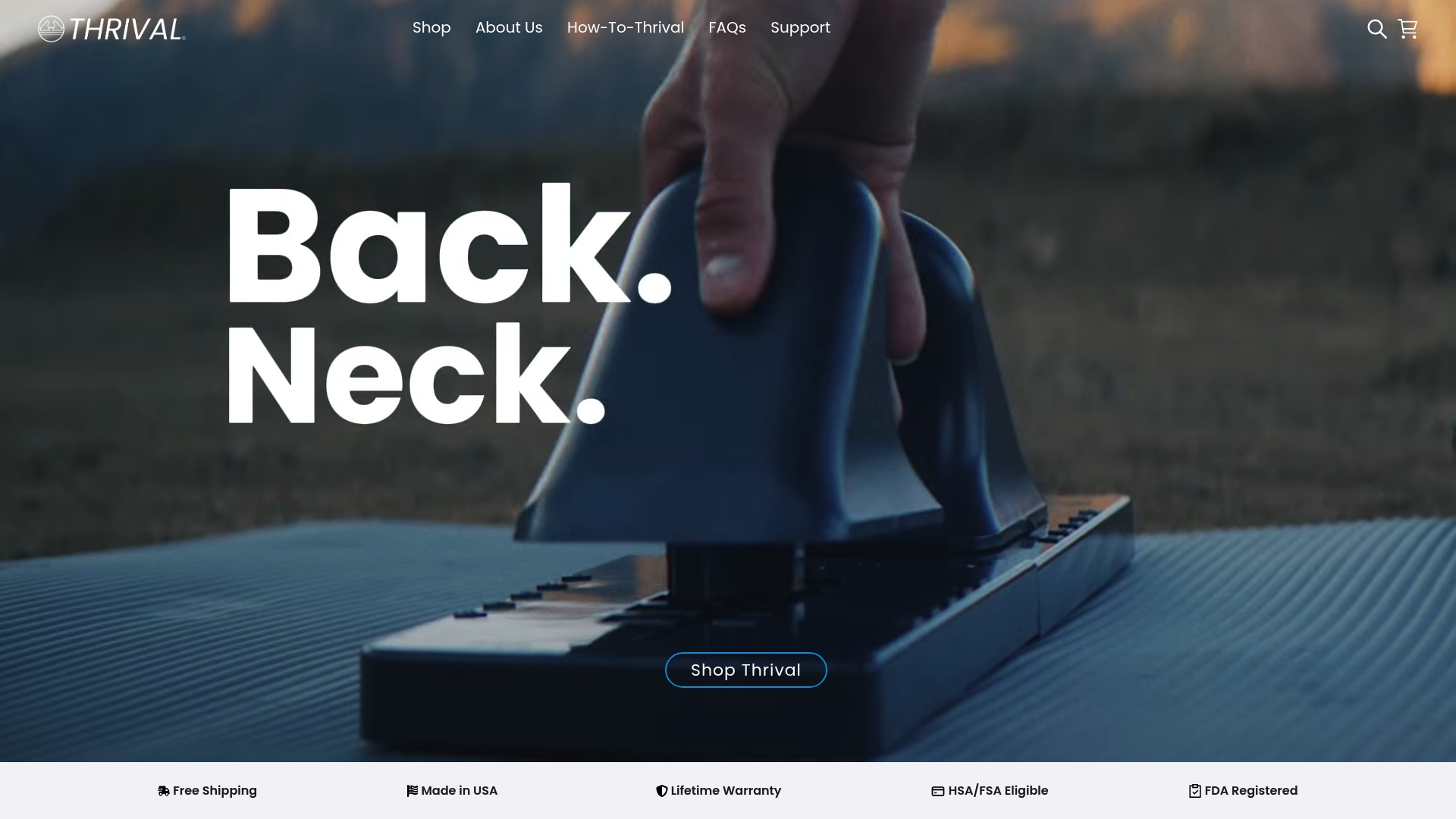
Thrival’s deep tissue massage system is built around a single base board with interchangeable attachments, each designed to target specific muscle groups. The Thrival Ballhead attachment replicates the classic lacrosse ball effect for precise trigger point release in the back, hips, and glutes. The Thrival Arch attachment supports spinal decompression and targets the paraspinal muscles that take the most load from prolonged sitting. Both are non-motorized, US-manufactured, and FDA-registered. Free shipping and a lifetime warranty come standard. Use them after your workday to clear the residual tension that ergonomic adjustments alone cannot fully eliminate.
FAQ
What is the role of ergonomics in pain prevention?
Ergonomics prevents pain by redesigning work environments and tasks to fit the human body, reducing physical stress on muscles, joints, and the spine. OSHA identifies poor ergonomic conditions as a primary cause of musculoskeletal disorders, making ergonomic design one of the most direct tools for injury prevention.
How often should you take movement breaks at work?
Movement breaks every 30 minutes are the clinical standard for preventing static muscle strain. Even two minutes of standing or walking resets muscle tension and reduces the cumulative load that leads to chronic discomfort.
Are ergonomic chairs enough to prevent back pain?
Ergonomic chairs reduce postural strain but do not prevent pain on their own. Equipment effectiveness depends on correct adjustment and complementary movement habits; a chair set up incorrectly provides little benefit over a standard seat.
What is the difference between engineering and administrative ergonomic controls?
Engineering controls physically change the workspace to remove hazards by design, such as height-adjustable desks or repositioned tools. Administrative controls, like break schedules and job rotation, reduce exposure but depend on consistent human behavior to work.
Does stress make musculoskeletal pain worse?
Yes. Stress and fatigue amplify pain perception, meaning the same physical strain feels more intense under psychological pressure. Integrated approaches that address both physical ergonomics and mental well-being produce stronger and more lasting pain relief outcomes.